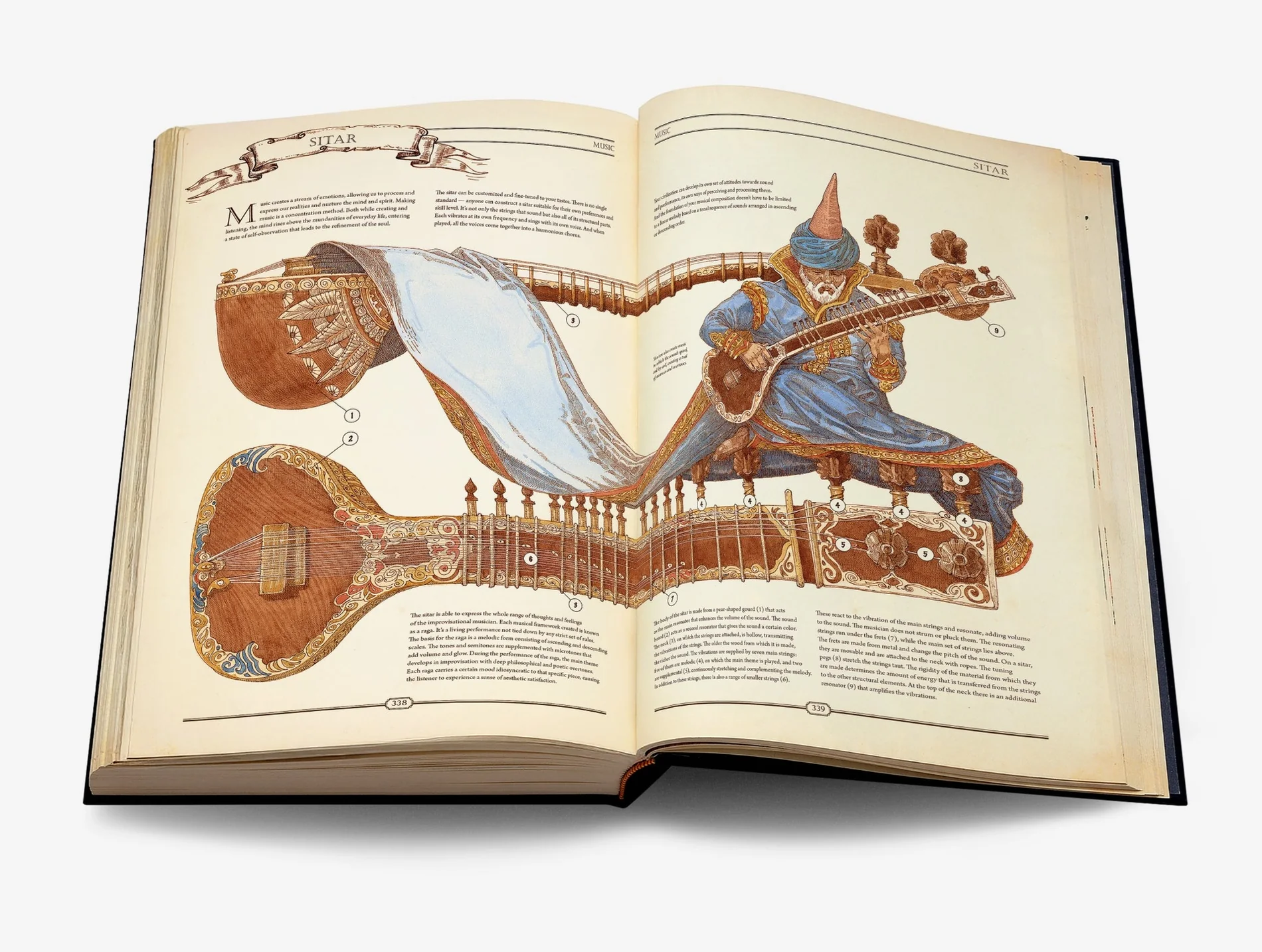
Most big illustrated books end up in one of two places. Some look impressive on a shelf but feel thin once you open them. Others are full of information yet hard to sit with for more than a few minutes. Hungry Minds aims at the middle. Their books are large, heavily illustrated, and built around broad subjects rather than short lists or tips. The best-known title is The Book: The Ultimate Guide to Rebuilding Civilization. It covers major inventions, discoveries, and systems that changed how people live, with original drawings on nearly every page.
The format sits closer to a visual encyclopedia than a standard textbook. You can open it almost anywhere and start reading without needing to follow a fixed order. The text stays clear, and the illustrations carry a lot of the detail that would otherwise fill paragraphs. The same approach shows up across their other titles. They keep the large format and the focus on original art, so the books feel consistent even when the exact subjects change.
The project began with a small creative group. They ran a crowdfunding campaign that raised more than expected, then expanded the team to finish the books. That background shows in the final product. The pages are dense, the art is original, and the physical object is built to stay open on a table rather than sit closed.
What You Notice When You Actually Open One
The illustrations are the first thing most people comment on. They’re original rather than stock images, and they’re detailed enough that you notice different elements on a second or third look. The pages are large, so the drawings have room instead of being reduced to small boxes. Topics range from practical things like early tools, basic machines, and everyday systems to wider ideas about how knowledge and technology develop over long periods.
The writing doesn’t try to turn everything into short blurbs. It’s readable, but it uses full sentences and connected ideas. That makes the books better for people who like to browse than for anyone looking for a quick summary they can finish in one sitting. The physical quality is also higher than average for illustrated non-fiction. The paper and binding hold up if the book stays open regularly. A lot of owners treat them more like reference objects than books they read cover to cover in a week.
Because the content is visual and non-linear, the books work well when someone wants something different from a screen. You can flip through a section, stop on a page, and pick it up again later without losing the thread.
How They Compare to Other Options
Compared with smaller paperbacks or standard textbooks, the main differences are the format and the density of the art. You get more visual information per page, but you also get a heavier and more expensive object. Compared with other large coffee-table books, these lean more toward information than pure decoration. The text is substantial enough that the books can sit beside other non-fiction rather than only serving as display pieces.
They’re not the lightest or cheapest choice. They take up real shelf space, and the price reflects the size, paper, and original illustrations. For people who already like reference books, history, science, or design, that trade-off often makes sense. For anyone who prefers something lightweight, quick to finish, or easy to carry, there are better fits elsewhere.
Who These Books Actually Suit
They work best if you already enjoy books you can open at random and keep coming back to. They’re also practical gifts for people who like visual non-fiction, especially if that person has a place to keep a large book out. The large format and the detail in the drawings make them different from typical gift books that look good once and then get put away.
They’re less ideal if you want something you can finish in a few evenings or carry in a bag. The size and the density mean most people use them in short sessions rather than long reading stretches. If that style matches how you already use books, the format supports it. If you prefer linear narratives or smaller paperbacks, these will feel oversized.
You can see the current titles, page counts, sizes, and any offers on the Hungry Minds site if you want to check the details yourself before deciding.